
Ethnologue Insights
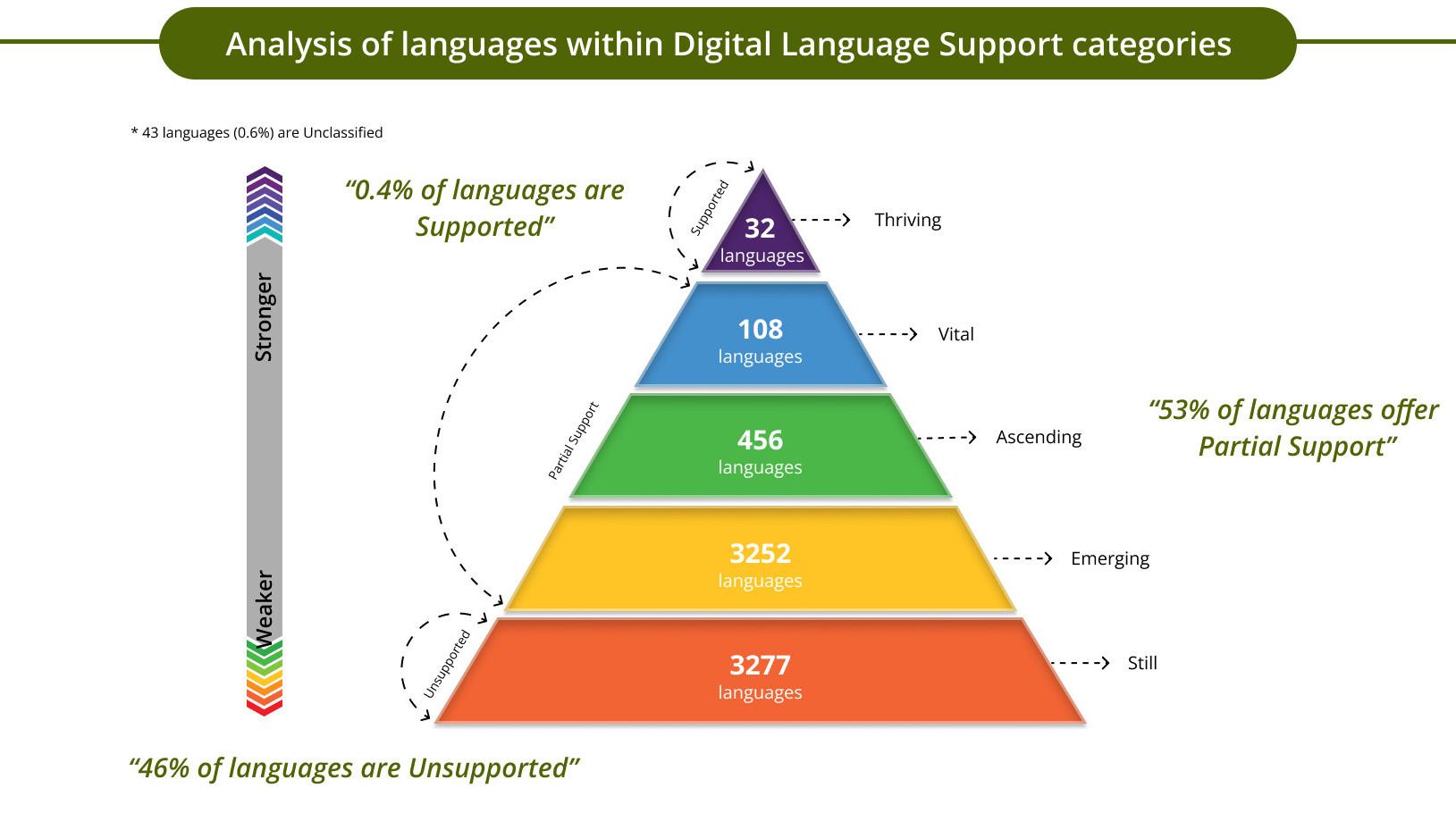
In the era of the Internet and global communications, immeasurable amounts of digital information are being created, shared, and consumed. For billions of people, this means instant access to health information, education, career opportunities, news, social interaction, entertainment, communication tools, and digital content of every conceivable kind.
Read More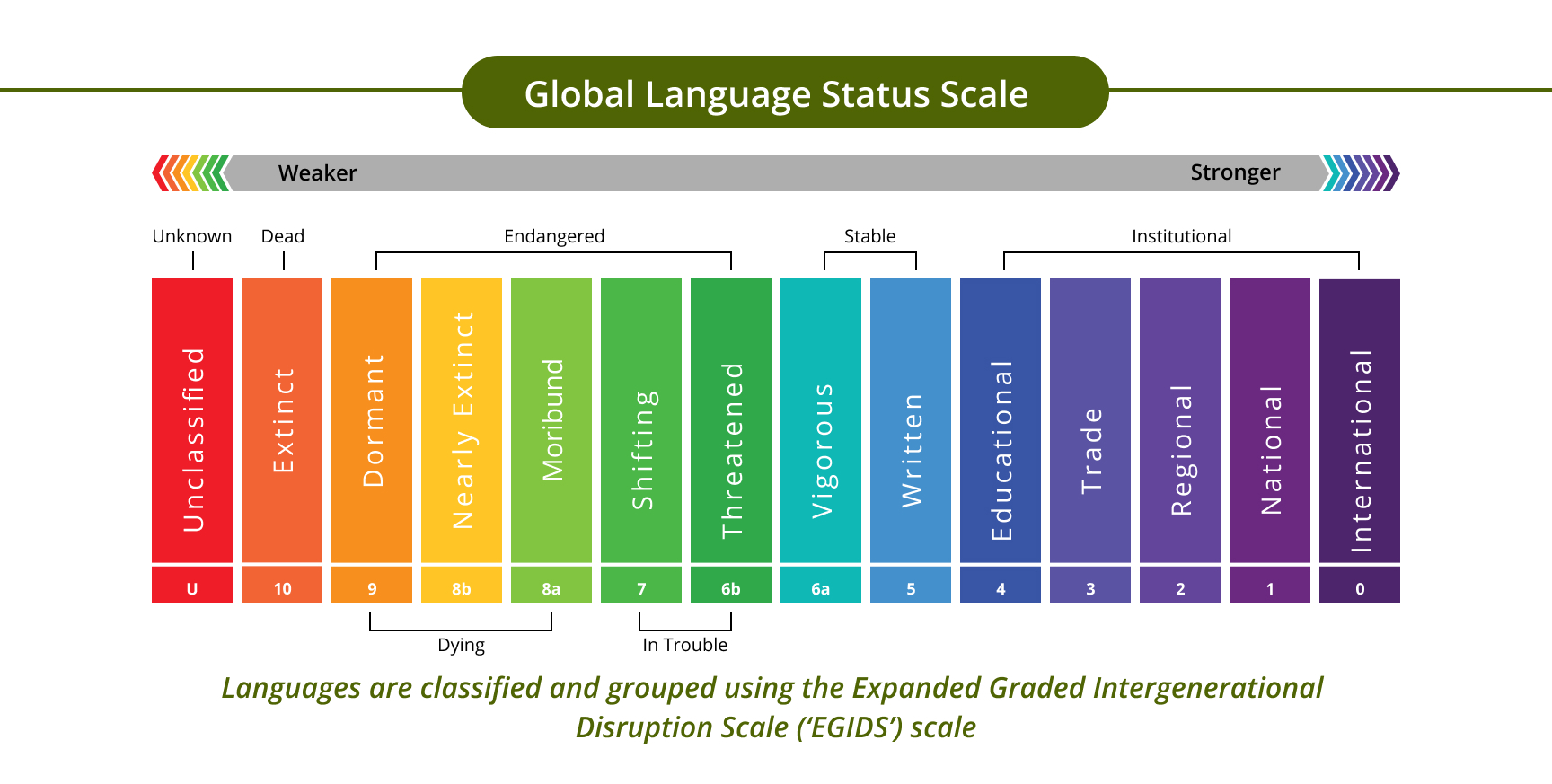
In similar fashion to the natural kingdom, where plant and animal species range from abundant to endangered, languages are also classified as stronger or weaker using different scales. One important dimension is language status, classified using the Expanded Graded Intergenerational Disruption Scale.
Read More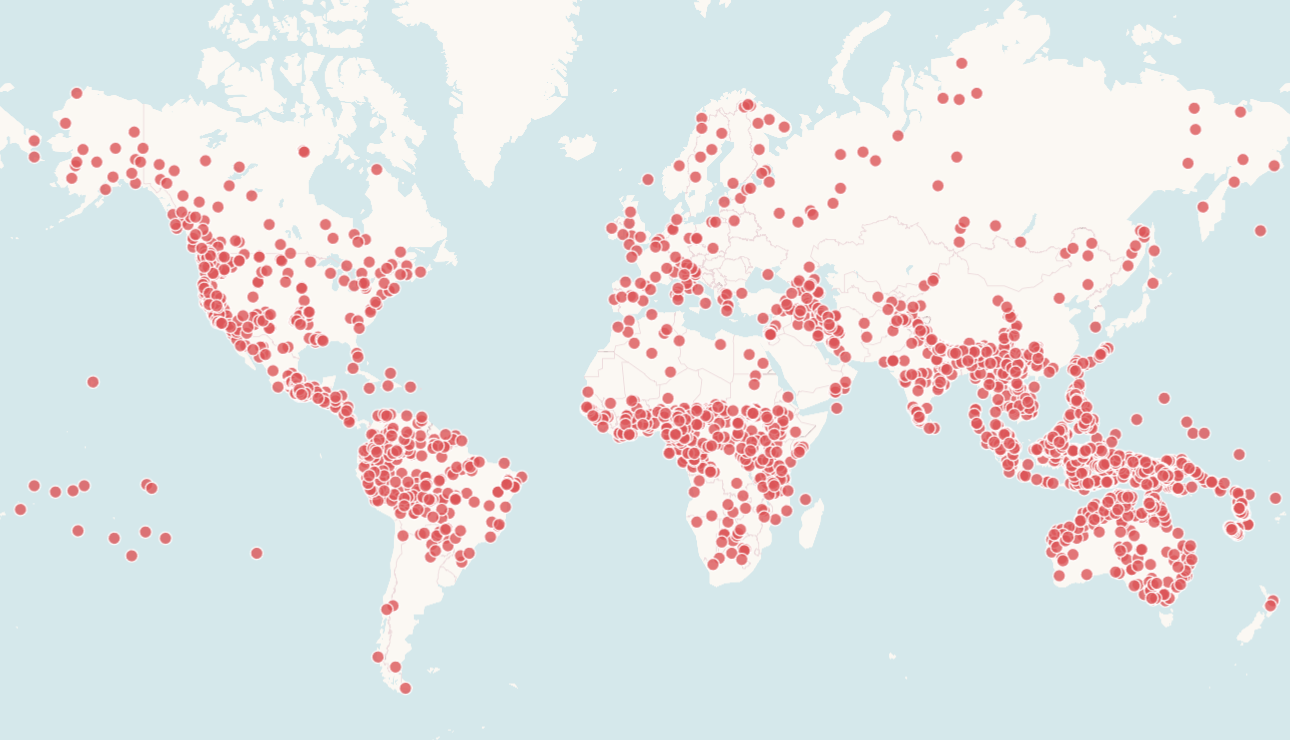
A language becomes endangered when its users begin to teach and speak a more dominant language to their children. We look at the number of endangered languages in the world today.
Read More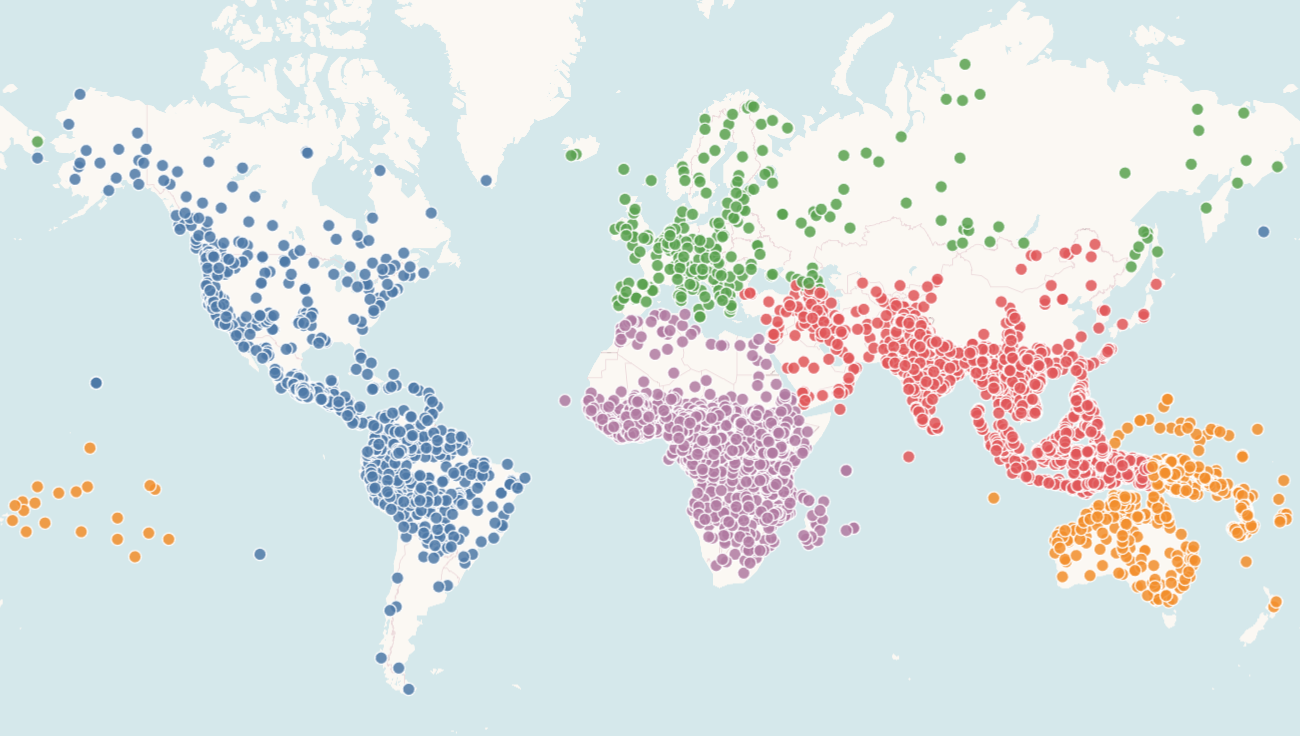
More than 7,000 languages are spoken today. We explore exactly how many there are, their geographic distribution, and compare endangered languages with the world's largest languages.
Read More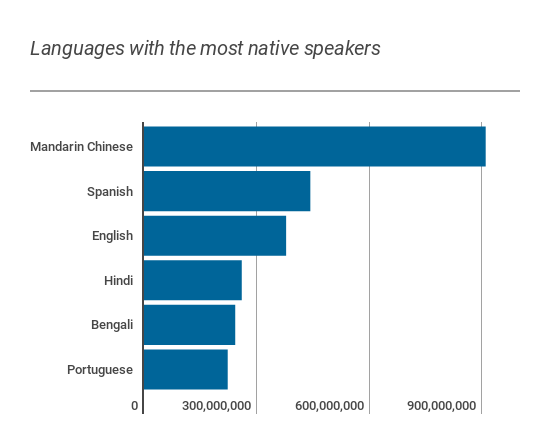
We factor in both native and non-native speakers to determine the largest language in the world. Also included is our current list of the world's four most spoken languages.
Read More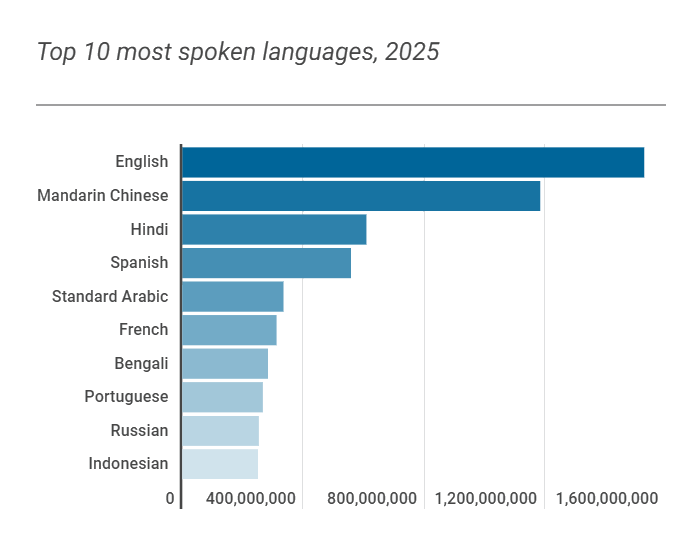
For over 15 years, we've published a list of the largest languages in the world – often cited by top-tier publications. The Ethnologue 200 are the top 200 most spoken languages, accounting for most of the world's population.
Read More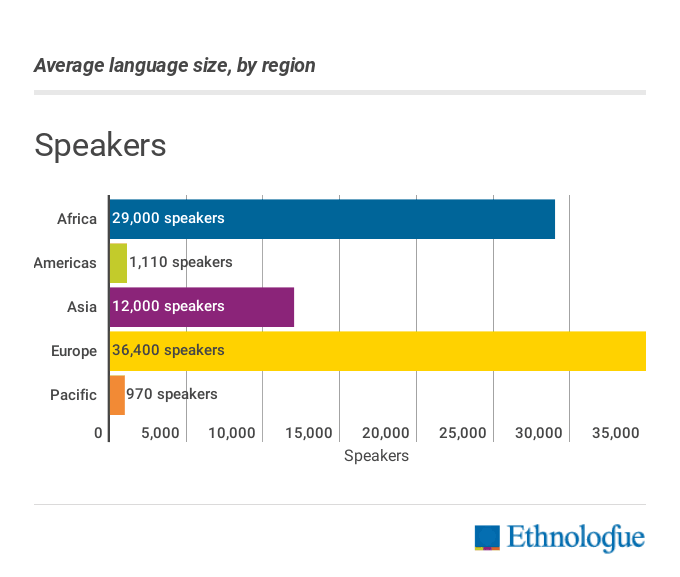
Myriad factors – terrain, cultural history, the spread of ancient civilizations – play into how many languages have originated within a certain area.
Read More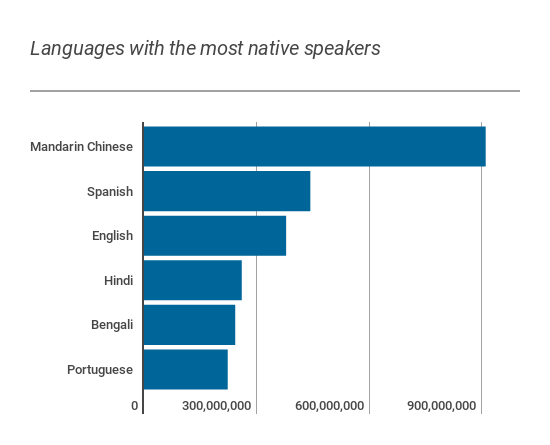
Languages are spread unequally throughout the world. We detail the ten countries where the most languages are spoken today, including all established and immigrant languages.
Read More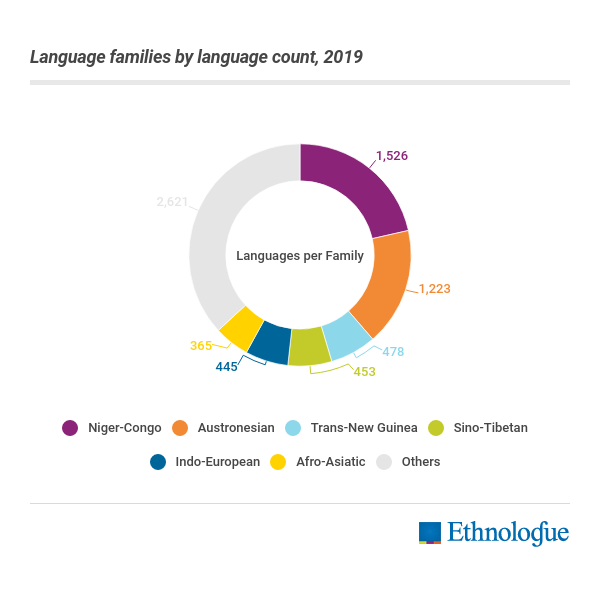
Of the 143 different language families, six stand out as the major language families of the world. They can be found throughout the world, spreading uniquely to different regions and countries.
Read More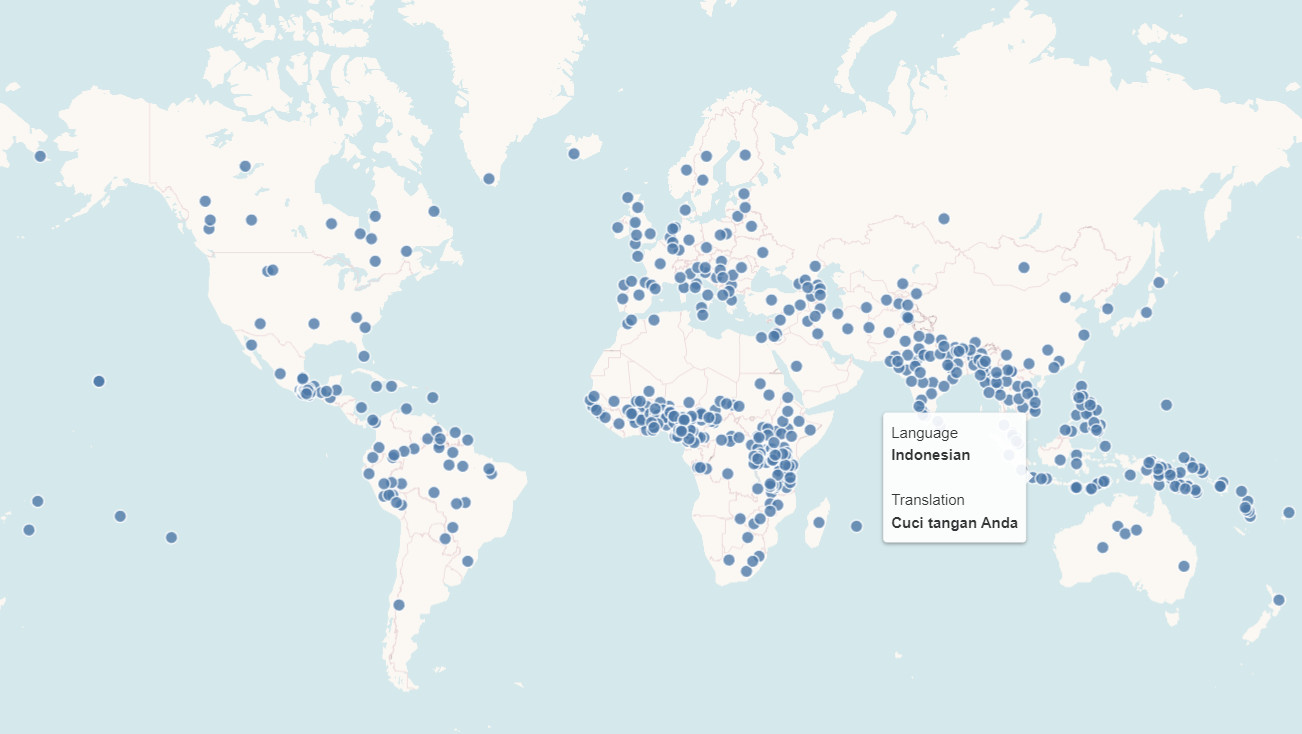
All of us are at risk for disease. But for millions who speak a lesser-known language, that risk is compounded by the lack of health materials in a language they understand.
Read More