
HN
Honduras
Summary
- Population
- 10,433,000
- Principal Languages
- Spanish
- Literacy Rate
- 87% (2018 UNESCO)
- International Conventions
- CDE (1960), CPPDCE (2006), CSICH (2012), ICCPR (1966), (), UNCRPD (2006), UNDRIP (2007)
- General References
- Campbell 1997, Campbell and Oltrogge 1980, Oltrogge 1977, Rivas 1993
- Deaf Population
- 18,000–70,000
- Language Counts
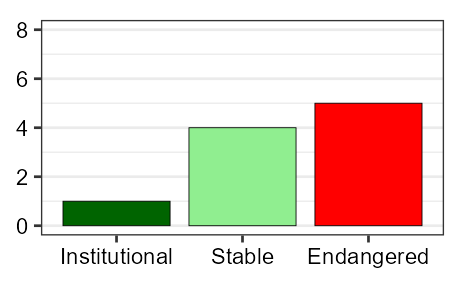
- The number of established languages listed for Honduras is 10. All are living languages. Of these, 8 are indigenous and 2 are non-indigenous. Furthermore, 1 is institutional, 4 are developing, 2 are in trouble, and 3 are dying. Also listed are 3 unestablished languages.
Languages
Arabic, Levantine
apc
- Users: 34,000 in Honduras (2023 Joshua Project), based on ethnicity.
Status: Unestablished.
Classification: Afro-Asiatic, Semitic, Central, South, Arabic.
Armenian, Western
hyw
- Users: 1,900 in Honduras (2024 Joshua Project), based on ethnicity.
Status: Unestablished.
Classification: Indo-European, Armenian.
Ch’orti’
caa
- Location: Copán department: along Guatemala border.
Users: No known L1 speakers in Honduras. Ethnic population: 33,300 (2013 census).
Status: 9 (Dormant).
Classification: Mayan, Yucatecan-Core Mayan, Core Mayan, Cholan-Tzeltalan, Cholan, Chorti-Cholti.
Chinese, Yue
yue
- Location: Tegucigalpa.
Users: 7,200 in Honduras (2023 Joshua Project), based on ethnicity.
Status: Unestablished.
Classification: Sino-Tibetan, Chinese.
English
eng
- Location: Islas de la Bahía department; large cities along north mainland coast.
Users: 33,400 in Honduras (2021), including 14,300 speakers of Bay Island Creole English and 19,100 English speakers on the mainland.
Status: 5* (Dispersed).
Alternate Names: Inglés.
Classification: Indo-European, Germanic, West, English.
Garifuna
cab
- Location: Atlántida and Colón departments; Cortes department: north coast between Masca and Plaplaya in Gracias a Dios department; Islas de la Bahía (Roatan island) department; cities: La Ceiba, Puerto Cortés, San Pedro Sula, and Tegucigalpa; 37 villages.
Users: 43,100 in Honduras (2013 census), based on ethnicity. 100 monolinguals. Ethnic population: 100,000 (2021 J. Leclerc). Total users in all countries: 119,400.
Status: 6b (Threatened).
Alternate Names: Black Carib, Caribe, Central American Carib, Garínagu, Karif.
Autonym: Garífuna.
Classification: Maipurean, Northern, Maritime, Ta-Maipurean, Iñeri.
Honduran Sign Language
hds
- Location: Scattered.
Users: 40,000 (2021 DBS/DOOR/SIL). Estimated 30,000–60,000 deaf signers, assuming 0.3%–0.6% of the total population. Other estimates: 34,800 (2008 WFD), 18,000–70,000 (Williams 2010:5).
Status: 5 (Developing). Recognized language (2013, Decreto no. 321-2013), Recognizes LESHO as a means of communication for deaf and the general population, provides for use in deaf education, training of interpreters and provision of interpreters for official government communications.
Alternate Names: Honduras Sign Language, LESHO, Lengua de señas hondureña, Lengua de señas hondureñas.
Classification: Sign language, Deaf community sign language.
Lenca
len
- Location: Comayagua, Francisco Morazán, Intibucá, La Paz, Lempira, and Valle departments.
Users: No known L1 speakers. Last fluent speaker probably died by the 1970s (Campbell et al 1978). Some semi-speakers (Adelaar 2007). Ethnic population: 454,000 (2013 census).
Status: 9 (Dormant).
Alternate Names: Honduran Lenca, Lenka.
Classification: Lencan.
Mayangna
yan
- Location: Colón department: southeast corner; Gracias a Dios and Olancho departments: between Patuca and Wanki rivers.
Users: 700 in Honduras (1997 SIL). Ethnic population: 2,690 (2013 census).
Status: 5 (Developing).
Alternate Names: Sumu, Tawahka.
Classification: Misumalpan.
Mískito
miq
- Location: Colón department; Gracias a Dios and Olancho departments, south, Coco river watershed; coastal area, and northwest from Puerto Lempira.
Users: 29,000 in Honduras (Rivas 1993). Ethnic population: 80,000 (2013 census).
Status: 5 (Developing).
Alternate Names: Marquito, Misquito, Mosco, Mosquito, Mískitu, Mísquito.
Classification: Misumalpan.
Pech
pay
- Location: Colón department: near Caribbean coast; Olancho department: Dulce Nombre de Culmi and Catamacas municipalities.
Users: 300 (Yasugi 2007). Ethnic population: 6,020 (2013 census).
Status: 8a (Moribund).
Alternate Names: Paya, Pesh, Seco.
Classification: Chibchan, Chibchan B.
Spanish
spa
- Users: 10,292,000 in Honduras, all users. L1 users: 10,100,000 in Honduras (2022). L2 users: 192,000 (2022).
Status: 1 (National). Statutory national language (1982, Constitution, Article 6).
Alternate Names: Castellano, Español.
Classification: Indo-European, Italic, Romance, Italo-Western, Western, Gallo-Iberian, Ibero-Romance, West Iberian, Castilian.
Tol
jic
- Location: Francisco Morazán department: Montaña de la Flor and Yoro.
Users: 300 (Yasugi 2007). Ethnic population: 19,000 (2013 census).
Status: 7 (Shifting).
Alternate Names: Tolpan, Tolupan, Torrupan, “Jicaque” (pej.), “Xicaque” (pej.).
Autonym: Tol.
Classification: Jicaquean.
Languages by Status
Spanish
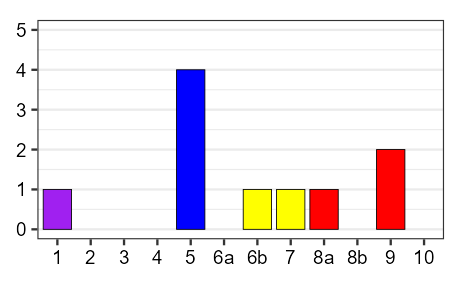
[spa] 1 (National). Statutory national language (1982, Constitution, Article 6). 10,292,000 in Honduras, all users. L1 users: 10,100,000 in Honduras (2022). L2 users: 192,000 (2022).
English
[eng] 5* (Dispersed). 33,400 in Honduras (2021), including 14,300 speakers of Bay Island Creole English and 19,100 English speakers on the mainland.
Honduran Sign Language
[hds] 5 (Developing). Recognized language (2013, Decreto no. 321-2013), Recognizes LESHO as a means of communication for deaf and the general population, provides for use in deaf education, training of interpreters and provision of interpreters for official government communications. 40,000 (2021 DBS/DOOR/SIL). Estimated 30,000–60,000 deaf signers, assuming 0.3%–0.6% of the total population. Other estimates: 34,800 (2008 WFD), 18,000–70,000 (Williams 2010:5).
Mayangna
[yan] 5 (Developing). 700 in Honduras (1997 SIL). Ethnic population: 2,690 (2013 census).
Mískito
[miq] 5 (Developing). 29,000 in Honduras (Rivas 1993). Ethnic population: 80,000 (2013 census).
Garifuna
[cab] 6b (Threatened). 43,100 in Honduras (2013 census), based on ethnicity. 100 monolinguals. Ethnic population: 100,000 (2021 J. Leclerc). Total users in all countries: 119,400.
Tol
[jic] 7 (Shifting). 300 (Yasugi 2007). Ethnic population: 19,000 (2013 census).
Pech
[pay] 8a (Moribund). 300 (Yasugi 2007). Ethnic population: 6,020 (2013 census).
Maps
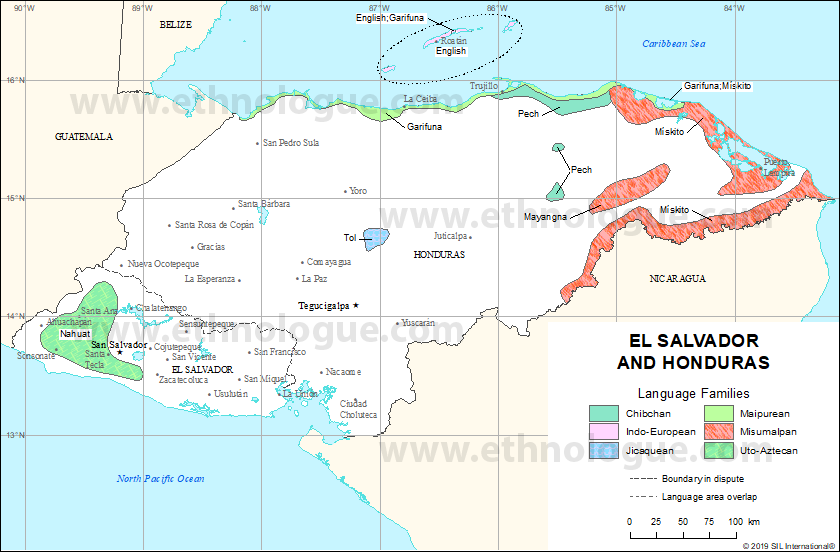
El Salvador and Honduras
Graphs
Language Vitality Profile
Details
Language Status Profile
Details
Resources
View Terms
Each Ethnologue country digest is a licensed product with restricted terms of use. Before downloading the product, you must agree to the following terms:
- This is a license for individual use. Just as with a conventionally published book, it is a violation of copyright to make a copy and give it to others.
- You may not redistribute this work in any form, including ingesting the contents into a database that is shared with others or posting it on a web site (whether public or private).
To inquire about permission for reuse or redistribution, please use the Contact Us form in the footer.